B2C PaymentsPayment Methods for Your Business
Building a business requires planning, funding, suitable systems, and a team that can serve customers consistently. Once an online business begins trading, its payment operations become an important part of the customer experience.
Businesses need suitable ways to collect and send funds, reconcile transactions, and handle exceptions. The available methods, processing times, fees, limits, and territories depend on the provider, payment rail, customer, and applicable requirements.
What Are B2C Transactions?
Business-to-consumer, or B2C, transactions generally involve a business providing products or services to an individual customer. B2C payment flows can also include eligible refunds, rebates, wages, insurance disbursements, and other transfers from an organisation to a recipient.
Each payment type can have different authorization, verification, safeguarding, timing, reporting, and regulatory requirements. Businesses should identify the purpose of a payment and use an appropriate supported method.
How Digital Banking Can Support B2C Payments
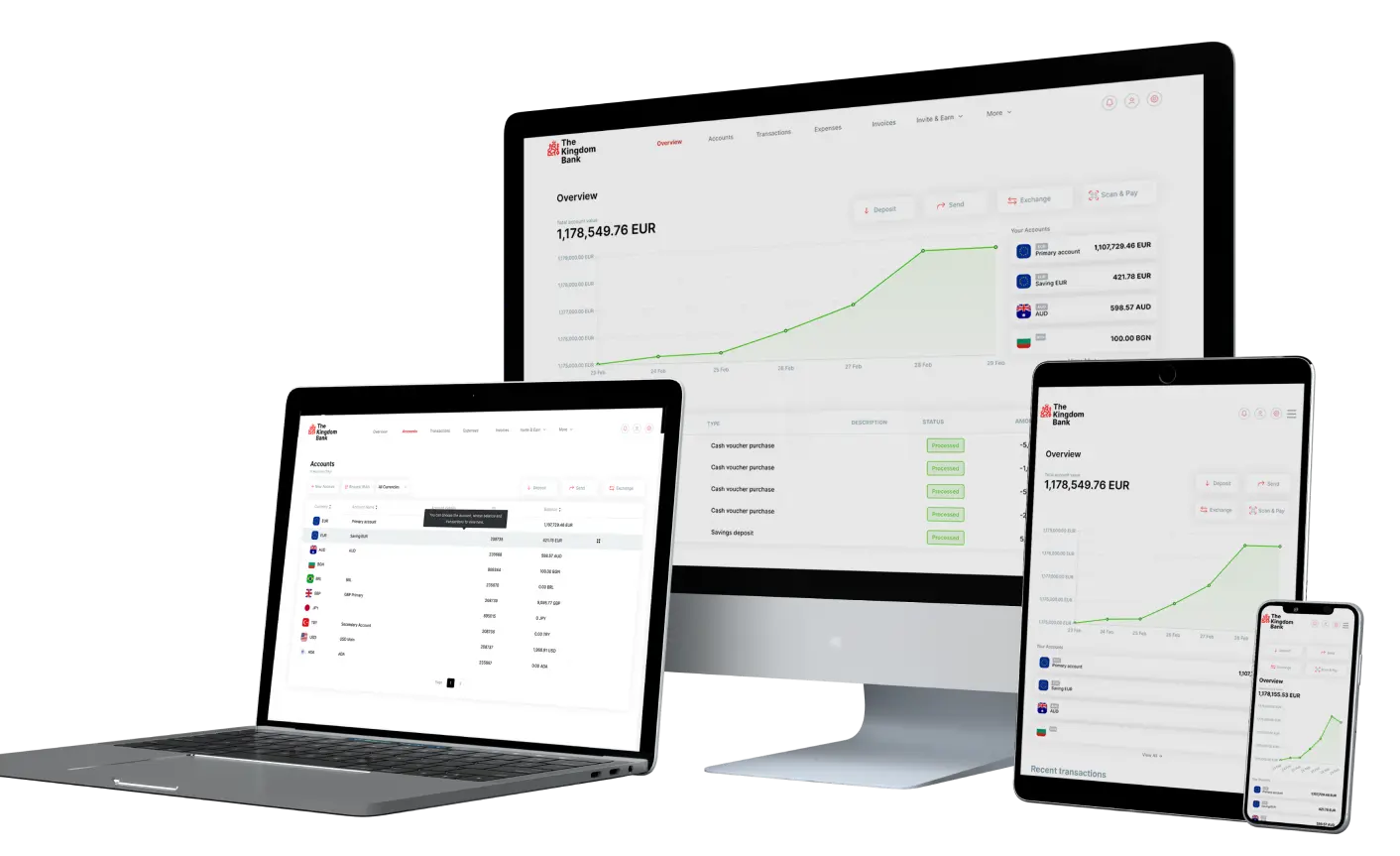
Digital banking tools can help eligible businesses view transactions, manage permissions, prepare payments, and monitor account activity online. Availability and processing depend on the account, service, payment rail, jurisdiction, checks, cut-off times, and third parties.
Some platforms may also provide invoicing, export, reconciliation, or reporting tools. Businesses should confirm which features are available for their account and retain the records required for accounting, tax, audit, and compliance purposes.
The Kingdom Bank provides eligible customers with digital account and payment services subject to onboarding, product availability, applicable terms, fees, limits, supported currencies and territories, and regulatory requirements. Contact the team to discuss whether the available services fit your business payment flows.
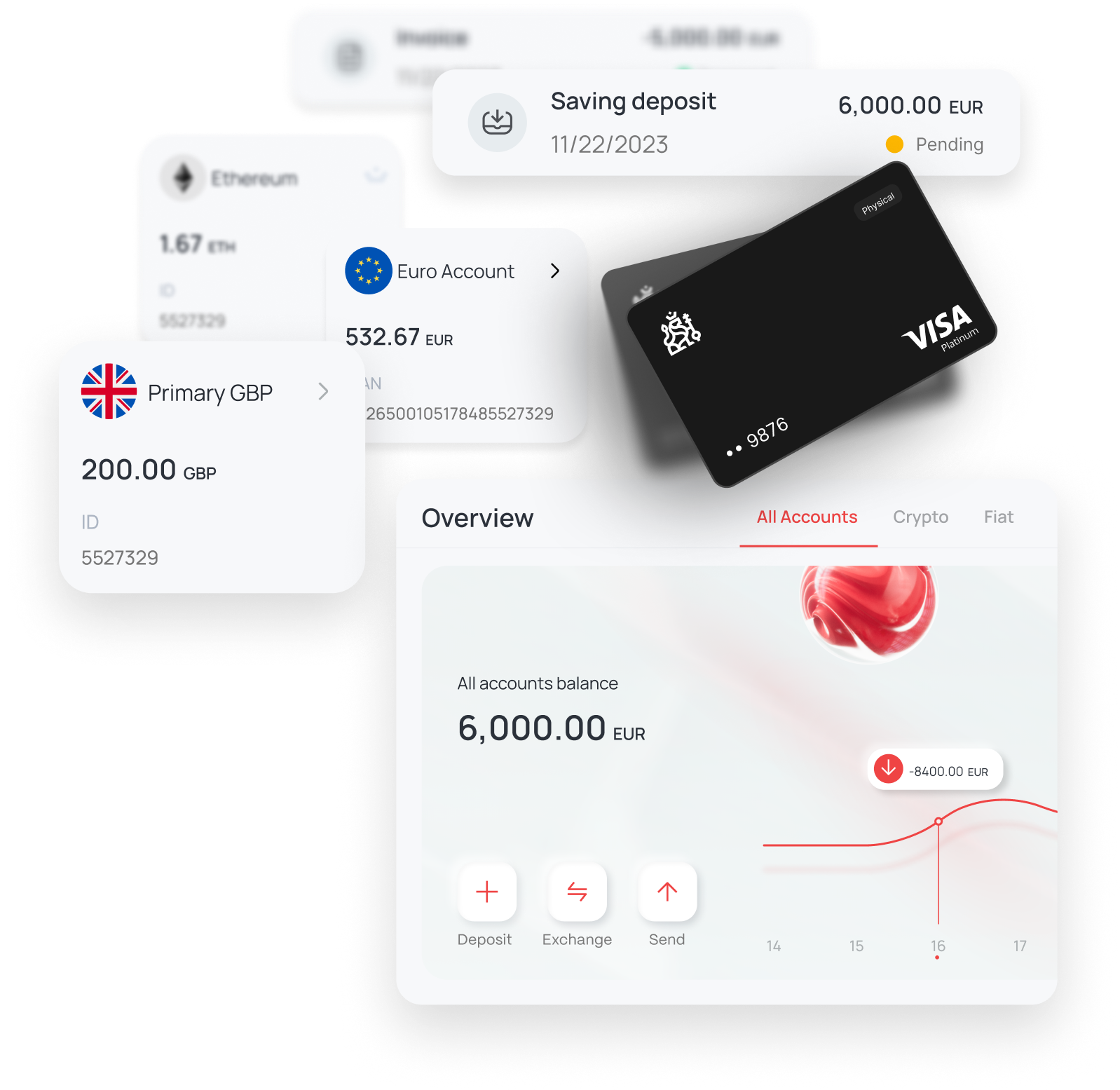
Discover The Kingdom Bank Online Portal
Take a guided tour and explore how to manage accounts, payments, cards, and more.
Start Tour →Anytime, Anywhere on Any Device
Join The Kingdom Bank’s community to stay connected and manage your finances easily from any device, anytime, anywhere.




Official Banking Partner of
West Ham United

Experience our award-winning bank!

Crypto Expo Dubai
BEST INTERNATIONAL FINTECH
BANKING AWARD 2021

forexdailyinfo.com
BEST CUSTOMER SUPPORT
BANK AWARD 2022
forexdailyinfo.com
CRYPTO FRIENDLY
BANK AWARD 2022
International Business Magazine
BEST DIGITAL BANKING
AWARD 2022
International Business Magazine
FASTEST GROWING DIGITAL
BANK AWARD 2023
Global Forex Awards
BEST B2B BANKING
SOLUTION AWARD 2023

Official Banking Partner of
West Ham United

HEAD OFFICE
First Floor, 43 Great George Street, Roseau, Commonwealth of Dominica
Post Code: 00109-8000
support@thekingdombank.com
Post Code: 00109-8000
support@thekingdombank.com
© 2026 The Kingdom Bank. All rights reserved.
The Kingdom Bank Corporation is licensed and authorised by the Financial Services Unit, Ministry of Finance of the Commonwealth of Dominica, licensed as a banking institution under the International Banking Act, fully authorised to provide services to clients worldwide, under the prudential supervision of the Financial Services Unit. The Kingdom Bank Corporation is registered in the Commonwealth of Dominica, Company Number 3159, with its registered address on 1st Floor 43 Great George Street, Roseau, Commonwealth of Dominica, Post Code: 00109-8000. The Kingdom Bank Corporation is a member of Swift™, Swift Code: KICPDMD2 and LEI Code: 894500N4DISL2NEIR756. FATCA GIIN: UM162U.99999.SL.212. The Kingdom Bank is ISO 27001 certified. The Kingdom Bank Corporation is PCI DSS compliant.
The Kingdom operates through licensed entities in multiple jurisdictions to serve a global client base. Dubai World Trade Centre Authority (DWTCA) under License L-4806, Dubai World Trade Centre.